First Sunday of Lent 2023
Catholic Calendars
1954 Calendar: Semidouble, Privileged Sunday of the First Class
1962 Calendar: III Class
1969 Calendar: Lenten Weekday
Mass
1954 Calendar:
After Terce, 2nd. Orations "A cunctis", 3rd. Orations "Pro vivis et defunctis", Dismissal = Benedicamus Domino. Folded Chasubles are worn. No Gloria. Credo. Preface: Lent
1962 Calendar:
Mass of Lenten feria, No Gloria, commemortion added, no Credo; Preface for Lent; Prayer over Peole
1969 Calendar: No Gloria
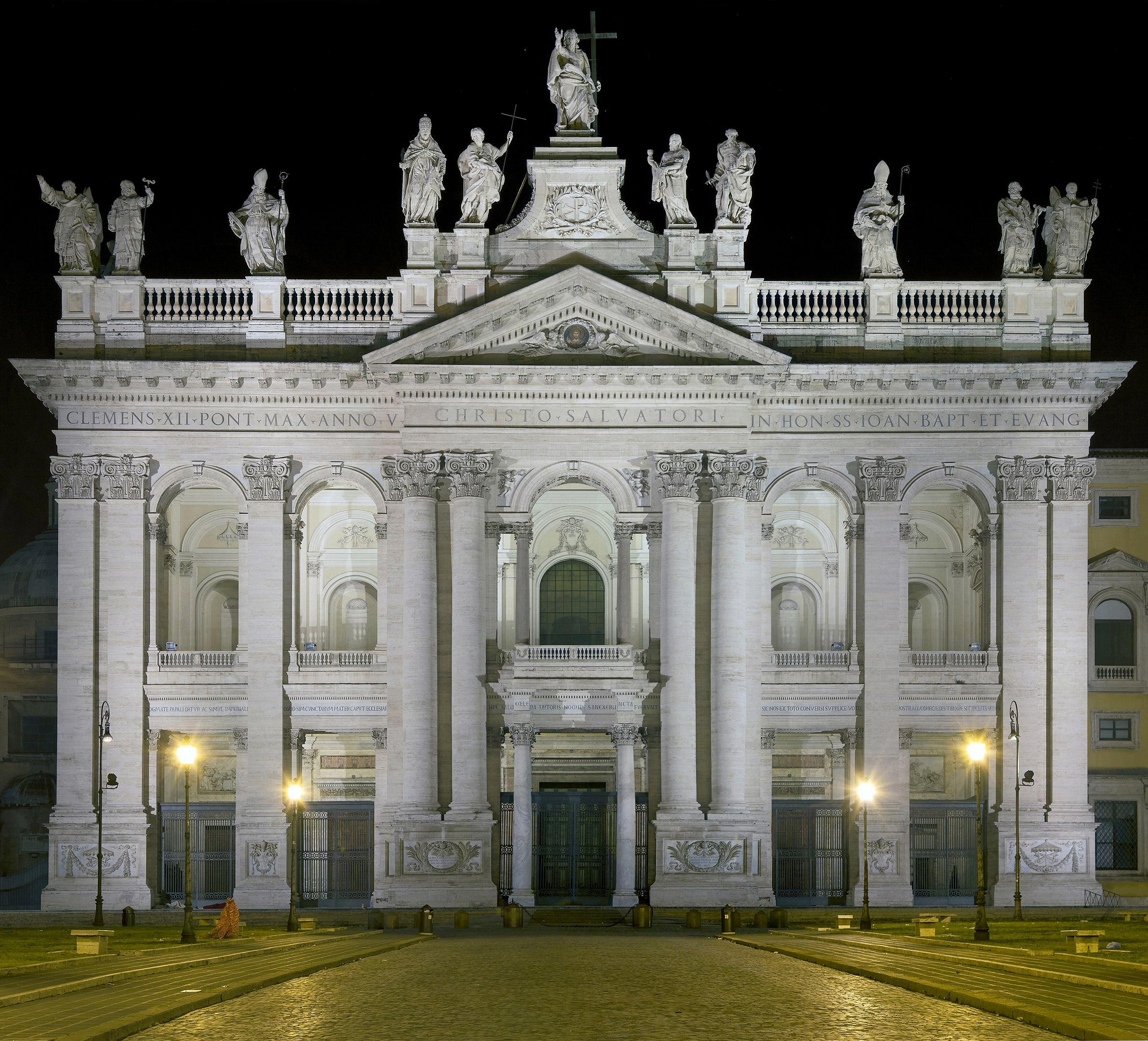
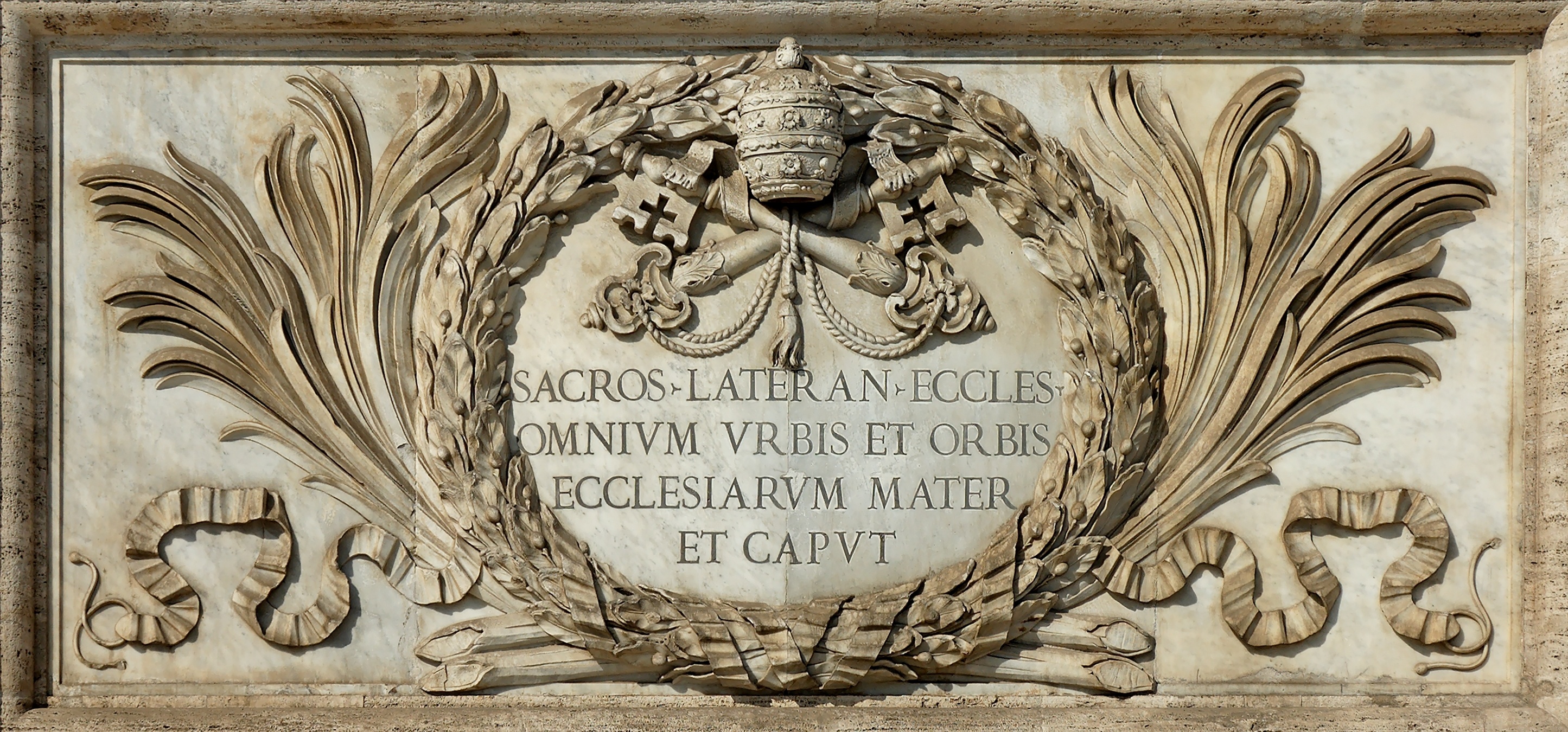
On the façade, an inscription proclaims that this is SACROSANCTA LATERANENSIS ECCLESIA OMNIUM URBIS ET ORBIS ECCLESIARUM MATER ET CAPUT, "The Most Holy Lateran Church, Mother and Mistress of all churches of the city and the World".
The property belonged to the Laterani family, but when they fell from grace it was confiscated. Constantine gave it to the church, and the church was built.
It was first known as the Basilica Salvatoris, Basilica of the Saviour. The present name is a result of the importance of the baptistry in the church, and of the presence of a Benedictine monastery dedicated to Sts John the Baptist and John the Evangelist. At an early stage, it was also called the Basilica Aurea, the Golden Basilica, because of its rich decorations.

The massive bronze doors of Saint John Lateran are over 2000 years old, actually close to 2102 years old. They are so perfectly balanced, it takes only one guy to open and close them. The doors were originally located in the Roman Curia, built around 80 BC. Julius Caesar would have walked through them on his way to work. They were moved here to the Lateran in the 1600s.
.jpg)
Nearby the Archbasilica is the Scala Sancta or Holy Stairs.
In 1586, when Sixtus V decided to build the present Lateran Palace, he asked Domenico Fontana, his architect, to use the grand staircase of the old palace, consisting of 28 marble steps. According to legend, St. Helena, the mother of Constantine, brought these steps in the fourth century by ship to Rome from the praetorium of Pontius Pilate in Jerusalem. If they are authentic, Jesus would have used these steps on His way to trial before His Crucifixion. For centuries, many pilgrims have honored the Passion of Christ by ascending the Scala Sancta on their knees. Since the early 1700s, the Holy Stairs have been encased in wood for protection. The stairs remained covered until 2019 when the protective wood was removed for restoration of the stairs. Following restoration, pilgrims were allowed to ascend the exposed holy stairs on their knees for the first time in almost 300 years. The stairs remained open to the public from April 2019 to July 2019 and then covered again in wood.
Much more on this most Holy Church can be found here:
https://www.romeartlover.it/Vasi46.html
http://web.archive.org/web/20050208231940if_/http://roma.katolsk.no/giovannilaterano.htm
Comments
Post a Comment